
The search landscape has shifted dramatically by early 2026. AI-powered engines now deliver instant answers instead of simple link lists, leaving many marketers wondering where their traffic will come from next. Traditional SEO still matters, but a new approach called generative engine optimization is gaining serious ground.
This raises a clear debate: geo vs seo. Which one actually drives more visitors to your site right now? From what I’ve seen in recent campaigns, neither works in isolation anymore.
In this post, you’ll get a straightforward breakdown of both strategies, real differences in how they perform, and practical steps to choose the right mix for your business. Let’s dive in.
What is Traditional SEO in 2026? Latest Updates
Search algorithms continue to prioritize helpful, people-first content, but the rules have tightened. Google and Bing now blend classic ranking signals with AI-generated overviews that appear at the top of many results.
How Search Algorithms Have Evolved This Year
Core updates focus on understanding user intent more deeply than ever. Engines reward content that answers questions completely without forcing clicks. Yet organic rankings still rely on backlinks, page speed, and mobile experience. Experts are seeing that sites optimized only for blue links often lose visibility when AI summaries steal the spotlight.
Core SEO Tactics That Still Deliver Results
Strong on-page optimization, technical fixes, and quality link building remain powerful. Creating in-depth guides and updating old content regularly helps maintain steady traffic. Many brands I’ve worked with still see solid returns from these basics, especially for commercial queries where users want to browse options.
Biggest Challenges SEO Faces in the AI Era
The main headache is zero-click searches. When AI overviews satisfy curiosity immediately, click-through rates drop noticeably. Plus, competition has intensified because anyone can generate basic content quickly. Traditional SEO alone struggles to guarantee visibility in this new environment.
Introducing GEO: Generative Engine Optimization Explained
Generative engine optimization, or GEO, focuses on getting your brand cited inside AI answers rather than just ranking in a list. It treats platforms like ChatGPT Search, Google Gemini, Perplexity, and Microsoft Copilot as the new discovery channels.
What Exactly Is GEO and How Does It Work?
GEO optimizes content so large language models find it trustworthy and relevant enough to reference. Techniques include clear structure, authoritative tone, and unique insights that AI engines love to pull from. Unlike SEO’s focus on keywords and links, GEO emphasizes being the source AI chooses to quote.
Proven GEO Techniques That Top Brands Use
Brands like Nike and Apple now create content with direct, conversational answers and supporting data that AI can easily extract. They add statistics, expert quotes, and comparisons that make their material stand out. From what I’ve noticed, these brands appear more often in AI responses after shifting to this approach.
Major GEO Developments and Tools in 2026
As of March 2026, Gemini’s AI Overviews appear in most searches, Perplexity has grown as a dedicated answer engine, and ChatGPT Search handles everyday queries smoothly. New tools help track citations across these platforms. Industry reports show brands treating GEO as its own channel rather than an add-on.
GEO vs SEO: Head-to-Head Comparison in 2026
Both strategies aim for visibility, but they operate differently in today’s AI-first world. Here’s a clear look at how they stack up.
| Aspect | Traditional SEO | Generative Engine Optimization (GEO) |
|---|---|---|
| Primary Goal | Rank in top 10 organic results | Get cited in AI-generated answers |
| Key Focus | Keywords, backlinks, technical signals | Authority, structure, unique insights |
| Traffic Type | Click-based visits | Branded mentions that drive direct or assisted traffic |
| Best For | Commercial and navigational searches | Informational and question-based queries |
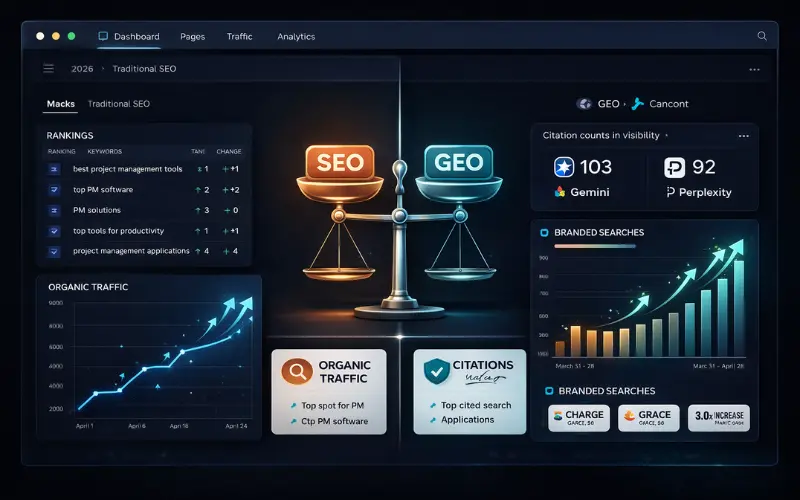
| Measurement | Rankings and organic sessions | Citation frequency and AI visibility |
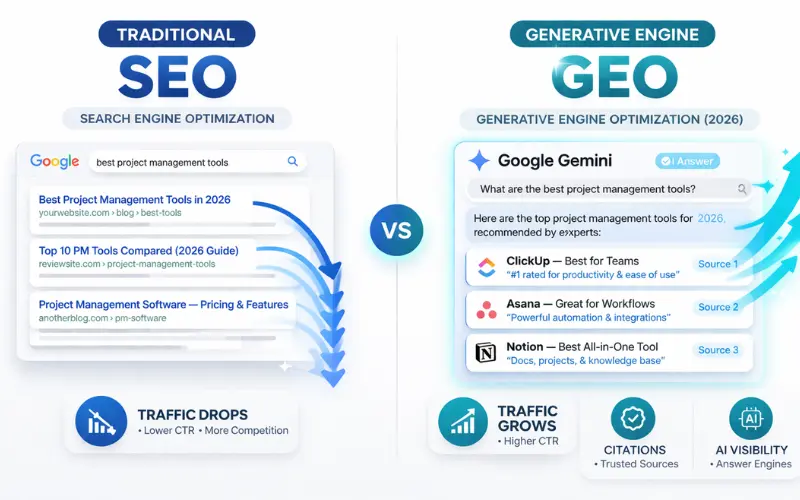
Key Differences That Matter for Traffic
SEO drives people to your site through links, while GEO often provides exposure without a click. Yet those AI mentions build trust that later converts. The overlap is smaller than many expect—industry observations suggest few top-ranked pages automatically appear in AI responses.
Surprising Similarities Between Both
Both rely on high-quality, helpful content and strong E-E-A-T signals. Technical cleanliness helps each approach. Plus, brands that excel at one often perform better at the other because the foundation of great content stays the same.
Pros and Cons of Traditional SEO
Pros include proven traffic systems and clear metrics most teams already understand. Cons involve declining clicks due to AI summaries and heavy competition for every keyword.
Pros and Cons of GEO
GEO offers stronger brand authority and future-proofing as AI search grows. The downside is newer measurement methods and the need to rethink content creation entirely. Many brands I’ve seen struggle at first but gain momentum quickly.
Which Strategy Will Drive More Traffic in 2026? Real Analysis
Early 2026 data shows a mixed picture. Traditional SEO still powers the majority of site visits for most businesses, especially those with strong domain authority. Yet AI platforms are pulling more attention every month.
Traffic Data and Trends from Early 2026
Experts are seeing AI search grow fast, with platforms like Gemini and ChatGPT handling billions of queries. However, many sites report that organic traffic remains dominant while AI citations create new awareness paths. The real shift appears in how traffic arrives—fewer direct clicks but more guided journeys.
Case Studies of Brands Switching Strategies
Amazon has layered GEO tactics on top of its massive SEO foundation, appearing frequently in product recommendation answers. Nike experimented with GEO-focused storytelling and noticed higher branded searches afterward. European retailers following similar hybrid paths report steadier overall visibility than those sticking to SEO alone. From what I’ve seen in recent campaigns, the switch pays off when done thoughtfully.
How to Implement GEO Strategies Step-by-Step
Getting started with GEO doesn’t require scrapping everything you know. Follow these practical steps that have worked well in campaigns I’ve supported.
- Audit your existing content for AI readability—use short sections, clear headings, and direct answers.
- Add unique perspectives or original data that AI engines find valuable and worth citing.
- Structure pages with schema markup and natural question-answer formats.
- Incorporate authoritative language and credible sources to boost trust signals.
- Test queries in multiple AI tools like Perplexity and Gemini to see where you appear.
- Track citations weekly and refresh content that drops out of AI responses.

These steps help brands like Apple stay visible without relying solely on traditional rankings.
SEO Best Practices That Still Work Alongside GEO
Keep building quality backlinks and optimizing for speed and mobile. Focus on user experience because AI engines favor sites people actually enjoy. Regular content updates and internal linking continue to support both strategies effectively. I’ve noticed that strong SEO foundations make GEO efforts much easier.
The Winning Hybrid Approach: GEO + SEO for Maximum Results
The smartest move in 2026 combines both. Use SEO for stable organic traffic and GEO for AI visibility and brand mentions. This hybrid optimization creates multiple touchpoints. Brands that balance the two see more resilient traffic patterns and stronger authority overall.
Start by optimizing core pages for both ranking and citation potential. Then expand GEO to informational content while maintaining SEO on commercial pages. The result is broader search visibility across traditional and generative engines.
Common Mistakes to Avoid in 2026
Don’t ignore GEO just because SEO still works today—traffic patterns are shifting. Avoid generic AI-generated content that lacks unique value; engines spot it easily. Another pitfall is measuring success only by rankings while missing AI citation opportunities. Finally, skipping regular testing in actual AI tools leaves gaps that competitors quickly fill.
Conclusion
The geo vs seo debate doesn’t have a single winner in 2026. Traditional SEO delivers reliable traffic while generative engine optimization secures your place in the AI answers users see first.
The clearest path forward is a hybrid approach tailored to your business type—e-commerce sites lean heavier on SEO with GEO support, while content brands benefit from stronger GEO focus. By blending both, you create multiple pathways for users to discover and engage with your brand, no matter how search evolves. From what I’ve seen in recent campaigns, businesses that adopt this hybrid model early gain a real edge in search visibility 2026 without losing the stable traffic they already have.
Take a moment today to review one key page on your site through both lenses. Small changes now can protect and grow your traffic as search keeps evolving. What’s your first step?
Frequently Asked Questions About GEO vs SEO
Is GEO replacing SEO completely?
No. GEO builds on SEO foundations rather than replacing them. Most experts recommend running both together for best results.
How quickly can I see GEO results?
Visible citations often appear within weeks once content is restructured, though full traffic impact takes a few months of consistent effort.
Which platforms matter most for GEO right now?
Google Gemini, ChatGPT Search, Perplexity, and Microsoft Copilot lead the space in 2026. Optimize for all of them.
Do small businesses need GEO?
Yes, especially if they rely on informational traffic. GEO levels the playing field by focusing on quality over domain size.
How do I measure GEO success?
Track brand mentions in AI answers, assisted traffic, and branded search growth alongside traditional SEO metrics.