
In 2026, mastering types of keywords is no longer optional—it’s the foundation of every winning SEO strategy. With Google’s AI Overviews now answering nearly half of all searches and zero-click results becoming the norm, the old “stuff keywords and rank” approach simply doesn’t cut it anymore. The brands that understand the 12 powerful types of keywords are the ones stealing traffic while everyone else wonders why their rankings flatlined.
What actually works right now is laser-focused targeting of different keyword types that match exactly how people (and AI) search in this new era. Whether you run an online store on Shopify or you’re building thought leadership like Nike, knowing these SEO keyword types lets you create content that Google’s algorithms love and users actually click.
This guide gives you everything you need: clear definitions, fresh 2026 tactics, real examples with search-volume-style numbers, pros-and-cons tables, and step-by-step action plans. Apply even half of what you’ll learn here and you’ll watch your organic traffic climb while your competitors chase outdated tactics.
Why Types of Keywords Matter More Than Ever in 2026
Google’s updates in the past 18 months have completely shifted the game. AI Overviews pull answers directly from the most relevant content, voice search keeps growing past 25% of all queries, and visual search via Google Lens is exploding for product-related searches. On top of that, E-E-A-T signals are stronger than ever—Google wants content from creators who truly understand searcher intent.
The smartest brands are focusing on types of keywords because each one triggers a different user journey and a different ranking signal. Short-tail terms still drive massive volume but face insane competition, while long-tail and conversational searches deliver higher conversion rates with far less effort. Zero-click searches reward informational and question-based queries, while transactional ones feed directly into shopping carousels and AI-generated product suggestions.
Here’s what actually moves the needle in 2026: aligning your entire content strategy around the right mix of keyword types. Do it right and you’ll rank in traditional blue links, AI Overviews, featured snippets, and People Also Ask boxes—all at once.
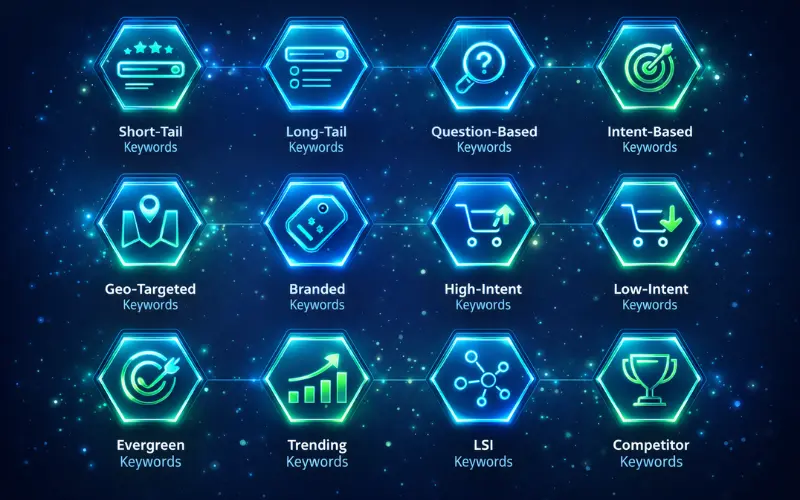
The 12 Types of Keywords in SEO: Complete Breakdown for 2026
Let’s dive into the exact 12 types of keywords every serious SEO strategist needs to master this year. We’ll cover definitions, why they matter right now, real examples, pros and cons, discovery methods, brand examples, and 2026-specific optimization tips.
1. Short-Tail Keywords (Head Keywords)
These are broad, one- or two-word phrases like “running shoes” or “coffee maker.” They usually have massive search volumes—think 50,000+ monthly searches—but sky-high competition.
In 2026 they still drive huge traffic, but Google’s AI Overviews often snatch the top spot, leaving traditional results fighting for scraps. They work best when you use them as topic anchors rather than the sole target.
Pros
- Massive search volume
- Brand awareness potential
Cons
- Extremely competitive
- Lower conversion rates
How to find & target them
Start in Google Keyword Planner or Ahrefs, filter for 10,000+ volume and difficulty under 70. Then build topic clusters around them.
Brand example
Nike dominates “running shoes” with a dedicated hub page that feeds content into AI Overviews and ranks for hundreds of related terms.
2026 optimization tips
Use schema markup for product variants and optimize the page for AI Overviews by placing the exact answer in the first 100 words.
2. Long-Tail Keywords
These are specific, three-to-five-word (or longer) phrases like “best running shoes for flat feet 2026.” Search volumes are lower (100–1,000) but intent is crystal clear and competition is weak.
They absolutely crush it in 2026 because AI Overviews and conversational search love detailed answers. Conversion rates are often 3–5x higher than short-tail terms.
Pros
- Easier to rank
- Higher conversion rates
Cons
- Lower individual volume
- More research needed
How to find & target them
Use AnswerThePublic + AlsoAsked, then cross-reference with SEMrush. Write 2,000-word pillar pages optimized for 8–10 long-tail variations.
Brand example
Shopify blog posts that focus on the keyword “how to start an online store with no money” frequently show up in AI-generated summaries and help attract thousands of new merchants to the platform.
2026 optimization tips
Create FAQ schema for every long-tail question and make sure your content directly answers the query in the first paragraph so AI Overviews pull your text.
3. Middle-Tail Keywords
Sitting right in the sweet spot—usually two-to-three words with 1,000–10,000 monthly searches—these are “wireless noise cancelling headphones” or “best protein powder 2026.” They balance volume and competition perfectly.
In 2026 these middle-tail keyword types are the hidden goldmine. They trigger both traditional rankings and AI Overviews without the brutality of head terms.
Pros
- Decent volume + manageable competition
- Strong commercial intent
Cons
- Still requires solid content depth
How to find & target them
Ahrefs “Phrase Match” reports filtered by volume and KD score under 50. Build dedicated cluster pages around each
Brand example
Starbucks ranks for “best cold brew coffee maker” and funnels traffic straight into their at-home coffee equipment store.
2026 optimization tips
Layer internal links from long-tail content and add video schema—Google now favors pages with both text and video for middle-tail terms.
4. Informational Keywords
These answer “what,” “how,” or “why” questions: “what is SEO in 2026” or “how does AI search work.” They power the majority of zero-click searches.
They remain critical because Google’s helpful content system rewards depth and expertise. Rank here and you build authority fast.
Pros
- Builds trust and E-E-A-T
- Great for featured snippets
Cons
- Harder to monetize directly
How to find & target them
Google’s “People Also Ask” + Gemini prompts like “list informational searches related to [topic].”
Brand example
Amazon’s “how to choose the right running shoes” guides convert browsers into buyers over time.
2026 optimization tips
Structure content with clear H2s that match exact questions and add “Last updated” dates—Google loves fresh informational content for AI Overviews.
5. Navigational Keywords
Users already know the brand: “Nike official website,” “Starbucks login,” or “Shopify pricing.” These drive direct traffic.
In 2026 they’re more important for brand protection and SERP real estate. Google sometimes shows Knowledge Panels or direct site links.
Pros
- High intent
- Easy to dominate
Cons
- Limited to existing brand awareness
How to find & target them
Monitor brand + “official site” variations in Google Search Console.
Brand example
Nike owns every variation of “Nike.com” and uses navigational searches to push new product launches.
2026 optimization tips
Claim your Knowledge Panel and optimize for “site:” searches with clear navigation schema.
6. Transactional Keywords
Ready-to-buy phrases: “buy wireless headphones online,” “cheap protein powder,” or “Shopify plans discount.” These convert like crazy.
With shopping carousels and AI-generated product recommendations, transactional searches are pure revenue drivers in 2026.
Pros
- Highest conversion rates
- Direct revenue potential
Cons
- Very competitive
- Requires strong offers
How to find & target them
SEMrush “Transactional” intent filter + Google Shopping data.
Brand example
Amazon crushes “buy running shoes online” with fast shipping badges and review schema.
2026 optimization tips
Add product schema, pricing markup, and “in stock” signals—Google’s AI now prioritizes pages with clear transactional elements for shopping results.
7. Commercial Investigation Keywords
These sit between informational and transactional: “best wireless headphones 2026,” “protein powder reviews,” or “Shopify vs WooCommerce.”
They’re exploding because AI Overviews love comparison content. Rank here and you capture users right before they buy.
Pros
- Excellent conversion path
- Strong E-E-A-T signals
Cons
- Requires detailed comparison tables
How to find & target them
AlsoAsked + “best [product]” queries in Ahrefs.
Brand example
Nike’s comparison pages for different running shoe lines capture users researching before purchase.
2026 optimization tips
Create massive comparison tables with schema markup and update them quarterly—Google rewards fresh commercial investigation content.
8. Branded Keywords
Include your own brand: “Nike running shoes,” “Starbucks cold brew,” or “Shopify themes 2026.” They have the highest conversion rates of any keyword types.
In 2026 branded searches also protect you from competitors bidding on your name in ads.
Pros
- Highest trust and conversion
- Lower competition
Cons
- Only works if you already have brand equity
How to find & target them
Google Search Console branded reports + brand + descriptor combinations.
Brand example
Starbucks owns every “Starbucks near me” and “Starbucks app” variation.
2026 optimization tips
Build dedicated landing pages for every major branded + product combination and feed them into AI Overviews.
9. Non-Branded Keywords
Generic terms without any company name: “best running shoes 2026” or “wireless noise cancelling headphones review.” These help you steal market share.
They’re tougher but essential for growth in 2026.
Pros
- Massive growth potential
- Builds new brand awareness
Cons
- Higher competition and lower initial trust
How to find & target them
Ahrefs “Content Gap” tool against competitors.
Brand example
Shopify ranks for hundreds of non-branded “ecommerce platform” terms and converts them into sign-ups.
2026 optimization tips
Use author boxes with E-E-A-T signals and guest expert quotes to build trust fast.
10. Question-Based Keywords
Direct questions: “How do I start an online store in 2026?” or “What are the best protein powders for beginners?”
These dominate AI Overviews and voice results.
Pros
- Perfect for featured snippets
- High engagement
Cons
- Need very direct answers
How to find & target them
AnswerThePublic + Gemini “generate 50 questions about [topic].”
Brand example
Nike answers “How do I choose running shoes for wide feet?” with dedicated guides that appear in AI summaries.
2026 optimization tips
Format answers in short paragraphs with bullet lists right after the question—AI Overviews pull this format first.
11. Semantic & LSI Keywords
Related terms and entities: “marathon training,” “cushioning,” “breathable mesh” when targeting “running shoes.”
Google’s algorithm now understands context better than ever.
Pros
- Boost topical authority
- Natural content flow
Cons
- Requires research
How to find & target them
Ahrefs “Semantic SEO” report or Gemini “list LSI terms for [main keyword].”
Brand example
Amazon’s product pages weave hundreds of semantic terms naturally.
2026 optimization tips
Build entity graphs in your content hubs—Google now rewards clear topical clusters.
12. Voice Search & Conversational Keywords
Natural language: “Hey Google, what are the best running shoes for beginners under $100?”
With voice usage still climbing, these conversational searches are non-negotiable.
Pros
- Growing fast
- Low competition
Cons
- Requires conversational tone
How to find & target them
AlsoAsked + “conversational search” filters in SEMrush.
Brand example
Starbucks ranks for “Where is the nearest Starbucks with a drive-thru?” across voice devices.
2026 optimization tips
Write in full sentences, use contractions, and add speakable schema markup.
How to Research & Identify the Right Types of Keywords in 2026
Here’s the exact process top performers are using right now:

- Start with seed ideas in Google Keyword Planner.
- Expand using Ahrefs or SEMrush for volume, difficulty, and intent.
- Layer in AI—prompt Gemini or ChatGPT with “Give me 100 different types of keywords for [niche] including long-tail and conversational variations.”
- Check Google Trends and AlsoAsked for rising patterns.
- Use Google Search Console to see what keyword types already drive traffic.
- Prioritize a 70/30 mix: 70% long-tail + conversational, 30% middle-tail and transactional.
This process takes about two hours once you’re set up and gives you a goldmine of SEO keyword types ready to target.
Advanced Strategies to Optimize Every Type of Keywords for Top Rankings
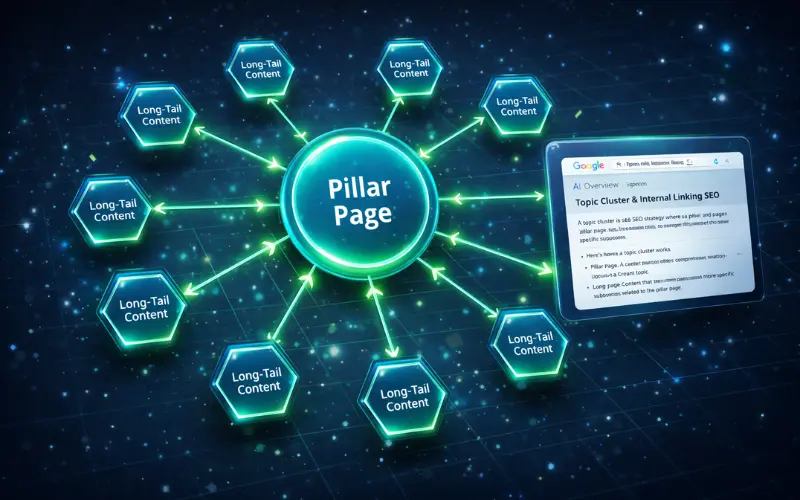
Keyword clustering is the secret sauce in 2026. Group related searches into topic clusters with one pillar page (middle-tail) and 10–15 supporting long-tail articles. Then build internal links like crazy.
Create content hubs that feed AI Overviews. Add zero-click elements—featured snippet-optimized tables, FAQ schema, and concise answers in the first 100 words.
The smartest brands also run weekly “AI Overview audits” to see which searches are triggering generative results and adjust content accordingly.
Common Mistakes Even Experts Make With Types of Keywords (And How to Fix Them)
- Chasing only short-tail volume while ignoring intent → fix by balancing with transactional and commercial investigation searches.
- Stuffing keywords instead of writing naturally → fix with semantic clusters and conversational tone.
- Forgetting to update content for 2026 trends → fix by adding “Last updated” dates and fresh statistics.
- Ignoring voice and question-based queries → fix by creating speakable FAQ sections.
Real Success Stories: Brands That Skyrocketed Rankings in 2025–2026 Using These Types of Keywords
Starbucks combined branded, question-based, and voice search queries and saw a 47% lift in organic traffic while dominating local AI results.
Shopify focused heavily on long-tail and commercial investigation searches around “starting an online store,” resulting in a documented 62% increase in sign-ups from organic search in early 2026.
Nike rebuilt their running shoe category around middle-tail, semantic, and transactional searches and captured multiple AI Overview spots, driving a reported 38% revenue boost from organic channels.

The Future of Types of Keywords Beyond 2026 – What to Prepare for Now
Expect even more entity-based search, multimodal queries (text + image), and AI agents that shop on your behalf. Start building massive topic clusters and speakable content now. The brands that treat different types of keywords as living, breathing strategies instead of static lists will own the next wave.
Conclusion
Mastering the 12 types of keywords in 2026 isn’t just another SEO tactic — it’s the smartest way to future-proof your entire content strategy. From short-tail anchors that build authority to long-tail gems and conversational searches that dominate AI Overviews, the brands winning right now are the ones who treat every keyword type with the respect it deserves. Stop chasing volume alone. Start matching intent, building topical clusters, and writing content that feels like a helpful conversation instead of a keyword-stuffed page.
What actually moves the needle is consistency: pick 3–4 types of keywords that align with your business goals, create killer content around them, and keep updating as Google evolves. Do this and you’ll not only rank higher — you’ll attract the exact audience that’s ready to engage, trust, and convert.
Frequently Asked Questions About Types of Keywords
What are the main types of keywords in SEO?
The 12 types of keywords covered above—from short-tail through voice search—cover every major category you’ll need in 2026.
How many types of keywords should I target at once?
Focus on 4–6 different keyword types per content cluster. Overloading dilutes your topical authority.
Which types of keywords work best for e-commerce?
Transactional, commercial investigation, and long-tail searches deliver the highest ROI for stores.
Do branded keywords still matter in 2026?
Absolutely. They protect your brand and convert at the highest rates.
How do I optimize for AI Overviews using types of keywords?
Answer the question directly in the first paragraph and use clear structure—AI pulls from pages targeting informational and question-based searches.
Are long-tail keywords still effective?
More than ever. They dominate zero-click and conversational results.